
Blog

What Really Makes Tableware Tough?
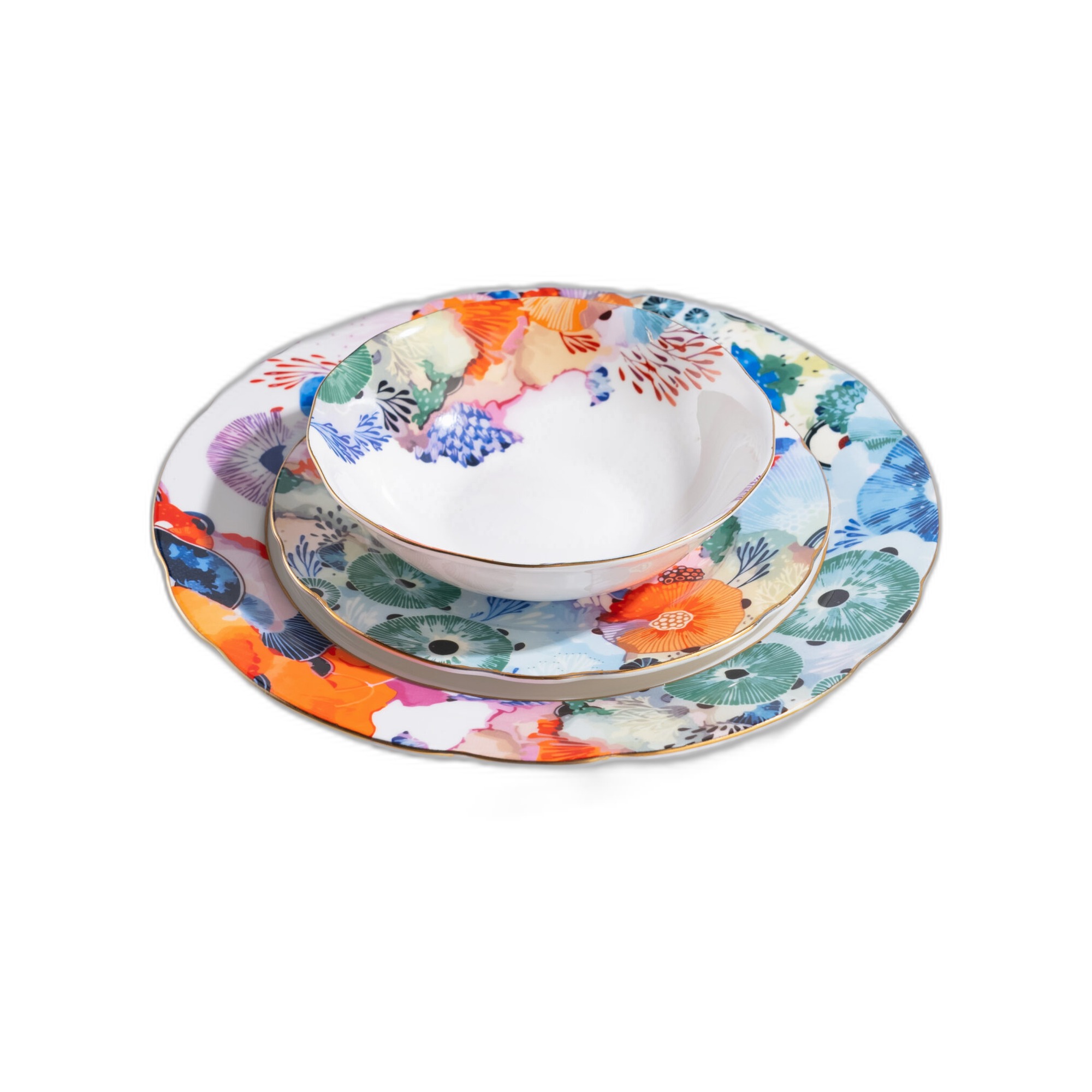
Look, you’re buying tableware, not just pretty plates. You need them to last. We’ve been making ceramics here in Chaozhou for decades, shipping containers full all over the world, and I can tell you, it all comes down to the stuff *inside* the clay. What are the ceramic material properties that matter most for strength, chip resistance, and that long-lasting shine your customers expect? Let’s get into it.
It Starts with the Clay: Kaolin, Feldspar, and the Mix
When we talk about ceramic material properties, we’re really talking about the raw ingredients that go into our bodies. The main players are kaolin, feldspar, and quartz (or silica). The *exact* blend is our secret sauce, developed over years and specific to the type of ware we’re making.
Kaolin: The Backbone
Kaolin, often called China clay, is the primary clay mineral. It gives the body its plasticity, meaning it’s easy to shape on the wheel or in the mould. But too much kaolin, and your ware can become brittle. Think of it as the structure.
Feldspar: The Flux
Feldspar is the magic ingredient that lowers the melting point of the silica during firing. Without enough feldspar, you’d need ridiculously high temperatures, and the body wouldn’t vitrify properly. Vitrification is key – it’s what makes the ceramic dense and non-porous. Feldspar helps fuse the other particles together in our kiln, creating that glassy matrix. We use different types of feldspar depending on the firing temperature and the desired outcome.
Quartz/Silica: The Stabilizer
Quartz, or silica, adds strength and helps control shrinkage during drying and firing. It prevents the ware from warping or cracking before it even gets into the kiln. It also contributes to the overall hardness and durability of the finished piece.
Getting the balance right is critical. It affects everything from how easy it is to form the shape to how strong the fired body is. We’re constantly testing and refining our own proprietary blends. This isn’t something you can guess at; it’s learned through countless firings and understanding how each component behaves.
Bone China vs. Porcelain vs. New Bone China: What’s the Real Difference?
This is a big one for buyers. Everyone asks about bone china, but it’s not always the right choice, and frankly, it’s more expensive. Let’s break down the ceramic material properties here.
True Bone China
This is the stuff of fine dining. What makes it special? Calcined bone ash. We typically use around 30-50% bone ash in our bone china formulations. This ingredient does two amazing things:
* **Translucency:** Bone ash particles refract light, giving bone china its signature, elegant glow. Hold a cup up to the light, and you’ll see what I mean.
* **Strength:** Despite its delicate appearance, bone china is incredibly strong. The bone ash creates a very dense, yet resilient body. It’s also lightweight.
But here’s the catch: bone china requires specific firing conditions, often a higher firing temperature, and the raw materials are more costly. Production is also more intricate. For many restaurants and hotels, especially those with high-volume use, it might be overkill.
Porcelain
This is the workhorse. Our standard porcelain body uses a carefully balanced mix of kaolin, feldspar, and quartz. It’s fired at high temperatures, typically around 1250-1350°C. The result?
* **Durability:** It’s very hard and chip-resistant.
* **Non-porosity:** Properly vitrified porcelain is waterproof and stain-resistant.
* **Versatility:** It’s excellent for everyday use, hotels, and restaurants needing a robust product.
* **Cost-Effectiveness:** Generally more affordable than bone china.
We use various grades of porcelain. For high-end restaurants, we might use a finer porcelain blend with less porosity. For more casual settings, a slightly different formulation balances strength and cost.
New Bone China (or Porcelain China)
This is where it gets confusing. New bone china is essentially a high-quality porcelain, but it’s formulated and fired in a way to *mimic* some of bone china’s properties, primarily translucency and a whiter appearance. It *does not* contain bone ash.
* **Appearance:** It’s often whiter and more translucent than standard porcelain.
* **Durability:** It’s very durable, comparable to good porcelain.
* **Cost:** It sits between standard porcelain and true bone china.
Why choose new bone china? It offers a premium look and feel without the full cost of true bone china. It’s a fantastic option for brands wanting that elegant aesthetic for their wholesale clients.
The Impact of Firing: Vitrification and Strength
What happens in our tunnel kilns is just as important as the raw materials. We fire our wares at specific temperatures and for specific durations.
Vitrification
This is the process where the clay particles fuse together under heat, creating a glass-like, non-porous structure. The degree of vitrification directly impacts the strength and water absorption of the ceramic. Higher firing temperatures and longer soak times generally lead to better vitrification. We monitor this closely. If ware isn’t vitrified enough, it can be weaker and more prone to staining.
Firing Cycles
Each material – porcelain, new bone china, bone china – has its own ideal firing profile. We have different kiln settings for different products. Firing too fast or too slow, or at the wrong temperature, can lead to all sorts of problems: warping, cracking, crazing (fine cracks in the glaze). We use advanced kiln technology, but a lot of it is still down to the experience of our firing technicians.
Glaze Matters: Protection and Aesthetics

The glaze isn’t just for show; it’s a crucial protective layer. It’s essentially a type of glass fused onto the ceramic body.
Durability of Glaze
A good glaze should be hard, resistant to scratching from cutlery, and resistant to crazing. We use high-quality glaze formulations and ensure proper firing to achieve a smooth, durable surface. Cheap glazes can wear down over time, revealing the body underneath and making the ware look old and scratched.
Decals vs. Hand-Painting
For decorated items, the application method is another factor in durability.
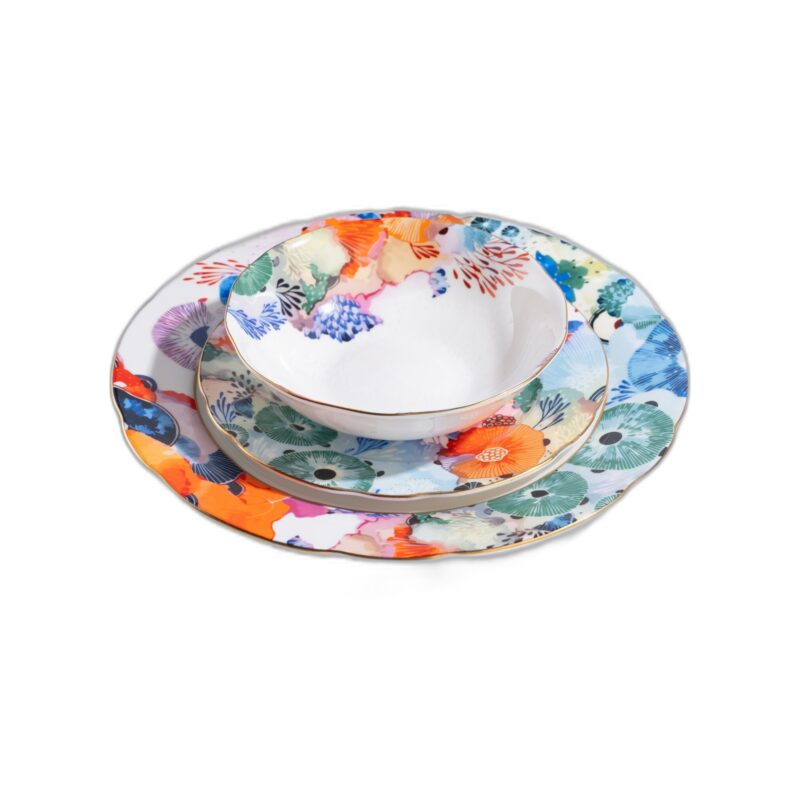
* **Decals:** Most of our decorative patterns are applied using decals. These are like high-quality transfers. The decal is applied to the glazed piece, and then the piece is fired again at a lower temperature (a ‘glaze fire’) to fuse the decal permanently into the glaze. The quality of the decal itself, and the firing process, are key to preventing the design from rubbing off.
* **Hand-Painting:** For truly premium pieces, hand-painting offers a unique artistic touch. However, it’s significantly more labor-intensive and thus more expensive. Even with hand-painting, the piece usually undergoes a glaze fire to seal the decoration.
We always recommend checking the specific application method for any decorated ware you’re considering.
Quality Control: Our Eyes and Ears on the Factory Floor
You won’t believe how many things can go wrong between raw clay and a finished plate. Our QC team is essential. They’re checking everything from the consistency of the raw material mix to the final inspection of every piece that leaves our factory.
This includes checks for:
* **Dimensional accuracy:** Making sure plates stack well, cups fit lids, etc.
* **Surface defects:** Pinholes, glaze drips, scratches.
* **Chipping and cracking:** Testing for visible faults.
* **Color consistency:** Ensuring batches match.
* **Decal adhesion:** Rubbing tests on decorated items.
We have multiple QC checkpoints throughout the production process. It’s not just a final inspection; it’s woven into every stage.
A Small Caveat: The Shipping Journey
Even with the best ceramic material properties and robust manufacturing, the journey from our factory in Chaozhou to your warehouse is long and can be rough. We pack our containers meticulously – layer upon layer of corrugated cardboard, airbags, and careful stacking. We use the Yantian port in Shenzhen, which is very efficient, but sea freight is inherently jostling. Good packaging is non-negotiable. It’s the last line of defense.
—
Understanding these ceramic material properties and production details is crucial for making informed buying decisions. It’s about getting the right balance of durability, aesthetics, and cost for your specific needs.
We’re always happy to discuss specific requirements and help you find the perfect tableware solution. Get in touch for a quote or to request samples.
Frequently Asked Questions
What is the typical MOQ for custom ceramic dinnerware orders?
Our standard MOQ is 1000 sets per design. This allows us to efficiently manage production and material sourcing.
What is the lead time for a new OEM ceramic product order?
Production lead time is typically 45-60 days after sample approval. This timeframe includes material preparation and firing.
Can you guarantee consistent color matching for our brand specifications?
Yes, we use precise color matching systems and conduct rigorous quality control checks. We provide pre-production samples for your final approval.
What types of ceramic materials do you specialize in for durability?
We primarily work with high-quality porcelain and bone china. These materials offer superior strength and chip resistance.
What is the minimum order quantity for custom decal application?
The MOQ for custom decal application is 500 sets per design. This ensures the printing process is cost-effective.
How do you ensure the durability of glazes against scratching?
We use high-firing glazes that are tested for scratch resistance. Our glazes are formulated to withstand daily use.
What are the standard shipping terms from your factory?
We offer FOB Chaozhou terms. Shipping costs and arrangements beyond the port are the buyer’s responsibility.
Can you produce custom shapes based on our designs?
Yes, we can produce custom shapes with new mold development. Mold costs apply and are quoted per design.
What is the typical thickness of your durable ceramic plates?
Standard plate thickness ranges from 4mm to 6mm. This provides a good balance of weight and strength.
Do you offer samples before bulk production?
Yes, we provide pre-production samples for all custom orders. A sample fee applies, which is often credited towards the bulk order.